
Introduction
Industrial workplaces have long been defined by heavy machinery, physical labor, and manual processes. But a quiet revolution is underway on factory floors, in warehouses, and on job sites around the world. The rise of the connected industrial worker is reshaping how frontline employees perform their jobs, communicate, stay safe, and contribute to organizational efficiency.
A connected industrial worker is an employee equipped with digital tools, wearable devices, and real-time data access that bridge the gap between human labor and Industry 4.0 technologies. This transformation isn’t just about adding gadgets to a uniform—it’s about creating a smarter, safer, and more productive workforce that operates in sync with intelligent systems.
What Does It Mean to Be a “Connected” Worker?
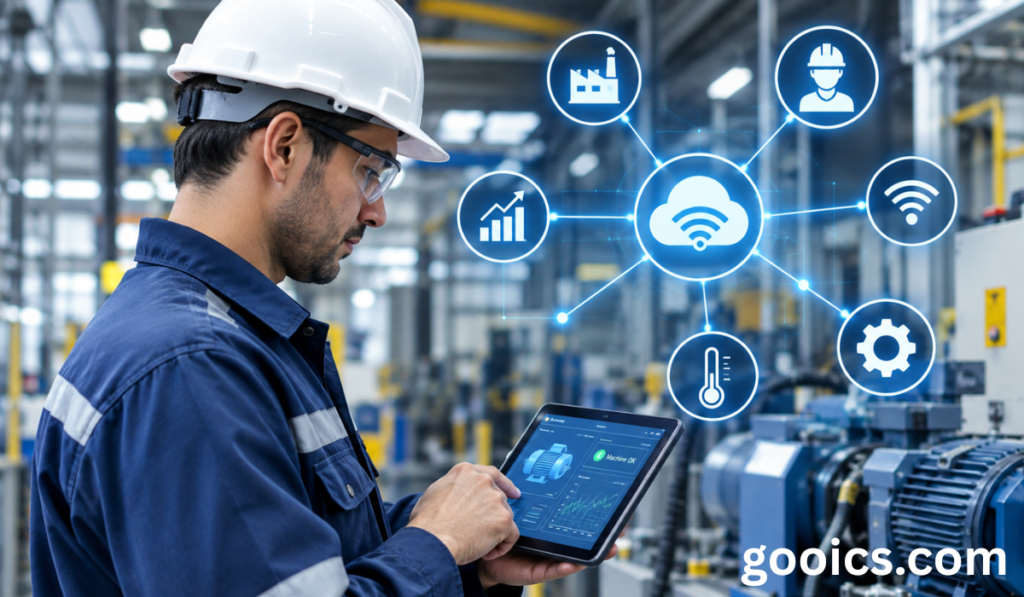
At its core, the connected worker concept integrates Industrial Internet of Things (IIoT) technology, wearable devices, mobile applications, and cloud-based platforms directly into the daily workflow of frontline employees. Instead of relying solely on paper checklists, radio communication, and tribal knowledge passed down verbally, workers now have access to:
- Real-time data about equipment performance and environmental conditions
- Digital work instructions that guide them step-by-step through complex tasks
- Wearable sensors that monitor health, location, and safety metrics
- Instant communication channels connecting them to supervisors, engineers, and remote experts
- Augmented reality (AR) tools that overlay digital information onto physical equipment
This shift transforms workers from isolated task-executors into active nodes within a broader digital ecosystem.
Key Technologies Driving the Connected Worker Movement
1. Wearable Devices
Smart helmets, vests, and wristbands equipped with sensors can track vital signs, detect falls, measure exposure to hazardous gases, and monitor fatigue levels. These devices provide early warnings that can prevent accidents before they happen.
2. Industrial IoT Sensors
Sensors embedded in machinery communicate directly with workers’ devices, alerting them to abnormal vibrations, temperature spikes, or maintenance needs—enabling predictive rather than reactive responses.
3. Mobile and Tablet-Based Platforms
Digital work instructions, checklists, and reporting tools replace clipboards and paper forms, reducing errors and speeding up documentation.
4. Augmented and Virtual Reality
AR glasses allow technicians to see schematics, repair instructions, or remote expert guidance superimposed directly onto the equipment they’re working on—dramatically reducing training time and errors.
5. AI-Powered Analytics
Machine learning algorithms analyze data streams from connected workers and equipment to identify patterns, predict failures, and recommend optimal workflows.
Benefits of a Connected Workforce
Enhanced Safety
Real-time monitoring means hazards can be detected and addressed immediately. Wearables that track fatigue, gas exposure, or heart rate can trigger alerts before a minor issue becomes a serious injury.
Improved Productivity
Digital instructions and instant access to information reduce downtime caused by searching for manuals, waiting for supervisors, or troubleshooting without guidance.
Better Decision-Making
Supervisors and managers gain visibility into operations in real time, allowing for faster, data-driven decisions rather than relying on delayed reports.
Reduced Training Time
New employees can be onboarded faster using AR-guided instructions and digital knowledge bases that capture the expertise of veteran workers.
Lower Operational Costs
Predictive maintenance enabled by connected sensors reduces unplanned downtime and extends equipment lifespan, translating into significant cost savings.
Challenges to Adoption
Despite its advantages, the shift toward a connected workforce isn’t without obstacles:
- Upfront Investment: Deploying IoT infrastructure, wearables, and software platforms requires significant capital.
- Workforce Resistance: Some employees may view constant monitoring as intrusive or fear that automation threatens job security.
- Data Security: With more devices connected to industrial networks, cybersecurity risks increase substantially.
- Integration Complexity: Legacy systems in older facilities often aren’t designed to communicate with modern IoT platforms, requiring costly upgrades.
- Skills Gaps: Workers and managers alike need training to effectively use and interpret new digital tools.
The Future of the Connected Industrial Worker
As 5G networks expand and edge computing becomes more accessible, the connected worker ecosystem will only grow more sophisticated. Expect to see:
- Greater use of predictive AI that anticipates worker needs before they arise
- Expanded exoskeleton technology to reduce physical strain during manual tasks
- Deeper integration between connected worker platforms and enterprise systems like ERP and MES
- Increased focus on worker wellbeing metrics, not just productivity
Industries such as manufacturing, oil and gas, construction, mining, and utilities are already leading adopters, and this trend is expected to expand across nearly every sector that relies on frontline labor.
Conclusion
The connected industrial worker represents a fundamental shift in how industrial organizations think about their workforce—not as isolated laborers following instructions, but as connected, empowered contributors within a data-rich digital environment. Companies that invest thoughtfully in this transformation stand to gain safer workplaces, higher productivity, and a more resilient, future-ready workforce.
FAQs: Connected Industrial Worker
1. What is a connected industrial worker?
A connected industrial worker is a frontline employee equipped with digital tools such as wearables, IoT sensors, mobile devices, and real-time data platforms that enhance safety, communication, and productivity on the job.
2. How does connected worker technology improve workplace safety?
It enables real-time monitoring of health metrics, environmental hazards, and equipment conditions. Wearables can detect falls, fatigue, or gas exposure and send instant alerts, allowing faster intervention before incidents escalate into injuries.
3. What industries benefit most from connected worker solutions?
Manufacturing, oil and gas, construction, mining, utilities, and logistics are among the top adopters, since these sectors involve hazardous environments, complex machinery, and a strong need for real-time operational visibility.
4. What technologies are used to connect industrial workers?
Common technologies include wearable sensors, smart helmets and vests, augmented reality (AR) glasses, industrial IoT devices, mobile/tablet applications, cloud-based platforms, and AI-driven analytics tools.
5. Is connected worker technology only about safety?
No. While safety is a major driver, connected worker platforms also improve productivity, reduce training time, support predictive maintenance, streamline communication, and enable better data-driven decision-making across operations.
6. How does a connected worker platform help with training?
New employees can use AR-guided instructions, digital checklists, and access to a centralized knowledge base, which speeds up onboarding and reduces reliance on in-person supervision from experienced staff.
7. What are the biggest challenges in adopting connected worker technology?
Common challenges include high upfront costs, employee resistance to monitoring, cybersecurity risks from increased connectivity, integration difficulties with legacy systems, and the need for digital skills training.
8. Does connected worker technology replace human jobs?
No. It’s designed to augment human capabilities rather than replace them—helping workers make faster decisions, avoid hazards, and perform tasks more efficiently, not eliminate the need for skilled labor.
9. How does IoT contribute to the connected worker ecosystem?
Industrial IoT (IIoT) sensors embedded in machinery communicate directly with workers’ devices, providing real-time alerts about equipment issues, enabling predictive maintenance and reducing unplanned downtime.
10. What is the future outlook for connected industrial workers?
The trend is expected to grow with advances in 5G, edge computing, AI-powered predictive analytics, and exoskeleton technology—leading to smarter, safer, and more resilient industrial workforces across nearly every sector.