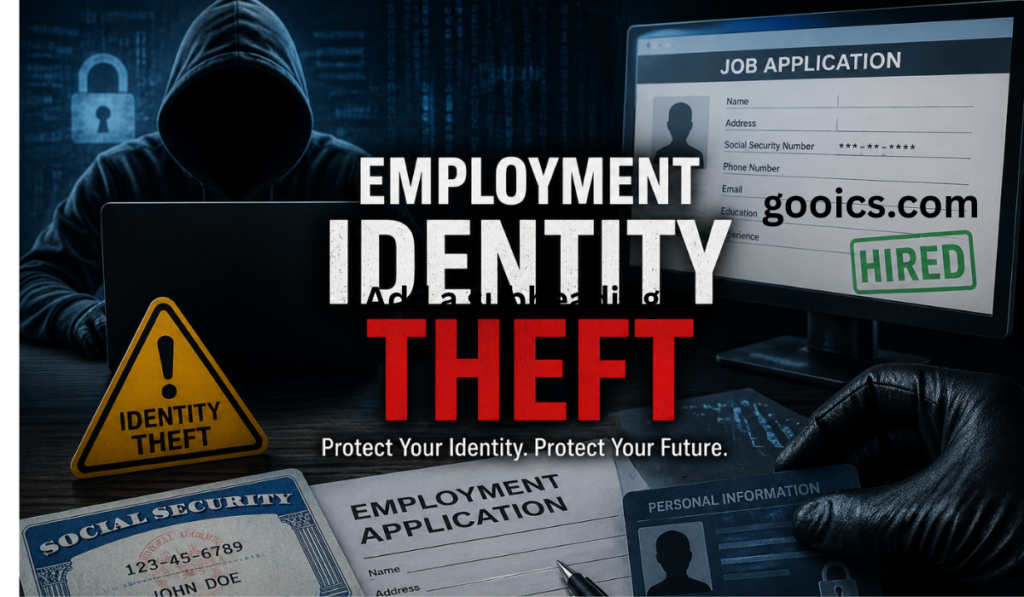

Most people know to watch for suspicious credit card charges or a sudden drop in their credit score. Far fewer realize that someone else could be clocking in for work under their name and Social Security number without their knowledge. This is employment identity theft, and it’s one of the quieter but more disruptive forms of identity fraud.
What Is Employment Identity Theft?
Employment identity theft happens when someone uses another person’s Social Security number (SSN) or other personal information to get a job, earn wages, or prove work eligibility. The person committing the fraud isn’t trying to drain a bank account or open a new credit card — they simply want to work, often because they aren’t authorized to under their own identity, have a criminal record they want to hide, or are avoiding debts, warrants, or child support obligations tied to their real name.
Because no money is taken directly from the victim, this type of fraud can go unnoticed for months or even years. Many victims only find out when:
- The IRS sends a notice about income they never earned
- A background check for a new job or apartment turns up unfamiliar employment history
- Their Social Security earnings statement lists wages from a company they’ve never worked for
- They apply for unemployment benefits and discover a claim already exists in their name
- A collection notice arrives for taxes owed on income that isn’t theirs
How Common Is It?
Employment identity theft is a smaller slice of the overall fraud picture, but it isn’t rare. According to the Federal Trade Commission’s Consumer Sentinel Network data, employment- and tax-related identity theft generated tens of thousands of reports in 2024, and industry trackers have noted double-digit year-over-year growth in this category. Some surveys have found that roughly one in eight identity theft victims specifically reported experiencing employment-related fraud, making it one of the more common categories after financial and synthetic identity theft.
The Identity Theft Resource Center’s 2026 trends report puts fraudulent employment cases at around 5 percent of all identity misuse it tracks — a meaningful share given how many different ways identity theft can occur.
How Does It Happen?
Employment identity theft doesn’t require sophisticated hacking. In most cases, it starts with a leaked or stolen SSN, which can come from:
- Data breaches at employers, healthcare providers, schools, or financial institutions
- Lost or stolen documents, such as Social Security cards, W-2s, or pay stubs
- Phishing scams that trick people into sharing personal details
- Insider misuse, where someone with legitimate access to personal records (an HR employee, a family member, or a former roommate) uses it without permission
- Purchases on the dark web, where stolen SSNs are sold in bulk
Once someone has a valid SSN, they can present it to an employer on an I-9 or W-4 form. Many employers don’t cross-check whether the SSN actually belongs to the person presenting it, so the fraudulent hire can go through without a hitch — and the wages get reported to the IRS and Social Security Administration under the victim’s name.
Warning Signs to Watch For
You may be a victim of employment identity theft if you notice any of the following:
- An IRS notice (like a CP2000) stating you earned income you didn’t report
- A tax return rejection because a return has already been filed using your SSN
- A Social Security earnings statement showing income from an unfamiliar employer
- Unexpected calls or letters from the IRS, a state tax agency, or a collections company about unpaid taxes
- A denied unemployment or benefits application because a claim already exists
- A background check discrepancy turning up jobs, addresses, or employers you don’t recognize
Because the damage often surfaces through the tax system, many people mistake employment identity theft for a tax filing error at first.
Why It Matters
Even though the fraudster is the one earning the wages, the consequences land on the victim:
- Tax liability confusion. The IRS may believe you owe taxes on income you never received.
- Lower future benefits accuracy. Fraudulent wages can, in rare cases, complicate your official earnings record, though the Social Security Administration generally has processes to correct this once verified.
- Background check problems. Future employers or landlords may see a confusing or inaccurate employment history.
- Broader fraud exposure. Someone willing to use your SSN for work is often willing to use it for other forms of fraud, from opening credit lines to filing false benefits claims.
What to Do If You’re a Victim
If you suspect your identity has been used for employment fraud, act methodically:
1. Confirm the Problem
Request a copy of your Social Security earnings statement through the SSA to check for unfamiliar wages. If the IRS has flagged unreported income, review the notice carefully — it typically names the employer that reported it.
2. Report It
File a report at IdentityTheft.gov, the FTC’s dedicated recovery site. It will generate a personal recovery plan and an official ID Theft Affidavit that you may need for disputes with the IRS, SSA, employers, or law enforcement.
3. Contact the IRS
If you’ve received a notice about unreported income, respond following its instructions and consider filing Form 14039 (Identity Theft Affidavit) if you believe someone else is using your SSN to work or file returns.
4. Notify the Social Security Administration
Ask the SSA to correct your earnings record once the fraudulent wages are confirmed and resolved with the reporting employer or IRS.
5. Place a Credit Freeze
Even though employment identity theft doesn’t directly touch your credit, a freeze with Equifax, Experian, and TransUnion helps prevent the same stolen SSN from being used for other kinds of fraud.
6. Document Everything
Keep copies of every notice, form, and phone call log. Recovery can take months, and having a clear paper trail speeds up disputes significantly.
7. Consider a Fraud Alert
A fraud alert on your credit file adds an extra verification step for anyone trying to open new credit in your name — a low-effort safeguard while you sort out the bigger issue.
How to Protect Yourself
No safeguard is foolproof, but these habits reduce your risk and help you catch problems early:
- Check your Social Security earnings statement annually through your “my Social Security” account.
- Review IRS transcripts periodically, especially if you suspect your information has been exposed in a breach.
- Guard your SSN closely. Only share it when absolutely necessary, and ask why it’s needed.
- Shred sensitive documents like old pay stubs, tax forms, and benefit statements before discarding them.
- Use strong, unique passwords and two-factor authentication on tax, banking, and Social Security accounts.
- Watch for phishing attempts that pose as employers, the IRS, or the SSA asking for personal details.
- Sign up for breach notifications so you know quickly if a company holding your data has been compromised.
Employment Identity Theft vs. Related Fraud Types
It helps to distinguish employment identity theft from similar categories:
| Fraud Type | What Happens |
|---|---|
| Employment identity theft | Someone uses your SSN to get a job or earn wages |
| Tax identity theft | Someone files a tax return using your SSN to claim a fraudulent refund |
| Synthetic identity theft | A fraudster combines real and fake information (e.g., a real SSN with a fake name) to create a new identity |
| Financial identity theft | Someone opens credit accounts, loans, or bank accounts in your name |
These categories often overlap. A stolen SSN used for employment today could just as easily surface in a fraudulent loan application tomorrow.
Frequently Asked Questions
Will I owe taxes on income someone else earned using my SSN? Not once the fraud is verified. You’ll need to work with the IRS to document that the income wasn’t yours, but you generally aren’t responsible for taxes on wages you never received.
Can this affect my future Social Security benefits? The SSA has processes to correct fraudulent entries on your earnings record once verified, so it shouldn’t permanently affect your benefit calculations — but it’s important to catch and correct errors promptly.
How would I even know if this happened to me? The most reliable way is to check your Social Security earnings statement annually and pay close attention to any IRS correspondence about unreported income.
Is this the same as someone stealing my job application information? Not exactly. Employment identity theft specifically involves someone using your identity to work, not just applying for jobs under a fake persona or misusing information from a job application you submitted.
The Bottom Line
Employment identity theft is easy to overlook because it doesn’t trigger the alarms most people watch for, like a maxed-out credit card or a strange bank withdrawal. Instead, it shows up quietly in tax notices and earnings records. Building a habit of checking your Social Security earnings statement once a year, staying alert to unexpected IRS mail, and protecting your SSN are the simplest ways to catch it early — and the sooner you catch it, the easier it is to fix.