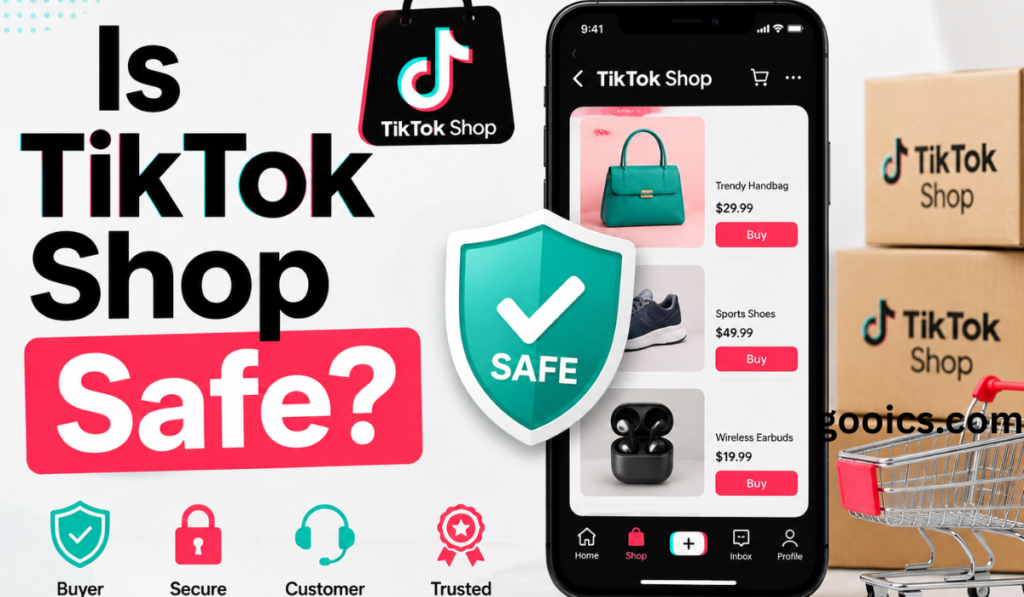

TikTok Shop has become one of the biggest social commerce platforms in the world, with shoppers spending well over $60 billion on it globally in 2025 alone. That scale of growth naturally raises a fair question before you tap “buy” on something you saw in your For You feed: is TikTok Shop actually safe?
The short answer is yes, with real caveats. TikTok Shop is a legitimate, regulated marketplace with genuine buyer protections — but it’s also a magnet for counterfeiters and low-effort scam sellers precisely because of how easy it is to go viral on the platform. Here’s how the safety mechanisms actually work, where the real risks sit, and how to shop smart.
Who Actually Runs TikTok Shop Now
Part of the safety conversation around TikTok has always been about ownership, not just individual sellers. That question was largely settled in January 2026, when TikTok’s US operations were formally spun into a new joint venture — TikTok USDS Joint Venture LLC — majority-owned by American investors including Oracle, Silver Lake, and MGX, with ByteDance’s stake reduced to under 20%. This resolved the years-long legal fight over the app’s US ownership and put a majority-American board in charge of data protection, algorithm security, and content moderation for US users. For everyday shoppers, this didn’t change how the app or TikTok Shop looks or works day-to-day, but it does mean the platform now operates under stricter, formally defined US oversight than it did in 2025.
The Built-In Safety Features
TikTok has invested in real infrastructure to make its marketplace trustworthy:
- Seller verification. Before anyone can sell on TikTok Shop, they must submit business documents and identity verification. This doesn’t eliminate bad actors, but it removes most anonymous, throwaway scam accounts.
- Encrypted, in-app payments. Transactions run through established processors like PayPal, Stripe, and major card networks. Your full card number never sits directly on TikTok’s servers, and you still keep your card issuer’s own fraud protections.
- Buyer Protection Program. TikTok gives buyers a window — commonly cited at up to 90 days — to file a claim if an order never arrives, arrives damaged, or doesn’t match its listing. That’s a longer window than many traditional marketplaces offer.
- Active enforcement. TikTok has reported removing hundreds of thousands of seller accounts and tens of millions of product listings for violating authenticity and safety policies, along with declining over a million new seller applications that failed verification.
These protections put TikTok Shop roughly in the same risk category as other large open marketplaces, such as Amazon’s third-party marketplace or eBay — not inherently safer, but not meaningfully more dangerous either, as long as you stay inside the platform’s official checkout.
Where the Real Risks Are
The same features that make TikTok Shop fun — viral product discovery, influencer promotion, aggressive discounting — are also what scammers exploit.
- Counterfeit goods. Branded and licensed products are the highest-risk category, since knockoffs can slip past automated listing checks before being reported and removed.
- Ghost or fly-by-night sellers. Some accounts exist only long enough to collect payments on a viral video before disappearing, especially for low-cost, high-volume items.
- Impersonation of verified brands. Scammers sometimes mimic the look of an “Official Store” badge or a recognizable brand name to borrow trust they haven’t earned.
- Off-platform phishing. Regulators have flagged large numbers of fake domains impersonating TikTok Shop to steal payment details or account credentials — none of which are protected by TikTok’s in-app safeguards, because the transaction never actually happens on TikTok.
- Data and tracking concerns. Beyond payment security, TikTok Shop purchases feed into the same behavioral tracking that powers the rest of the app’s recommendation engine, which is a legitimate consideration for privacy-conscious shoppers even when a transaction itself goes smoothly.
The Golden Rule: Never Leave the App
Nearly every safety guide on TikTok Shop converges on the same core rule: complete every part of the transaction inside TikTok. If a seller asks you to pay through a separate link, a different app, or a direct message, you lose every protection TikTok offers — the Buyer Protection Program, payment encryption, and dispute resolution all stop applying the moment money changes hands outside the platform.
How to Shop TikTok Shop Safely
- Stick to Official Stores and established sellers with a visible order history rather than brand-new accounts riding a single viral video.
- Read reviews with photos and videos, not just star ratings, since these are harder to fake convincingly than text reviews.
- Be skeptical of extreme urgency — countdown timers and “only 2 left” banners are legitimate marketing tools, but they’re also a favorite pressure tactic in scam listings.
- Treat unusually steep discounts as a signal to check further, not as proof of a deal — genuine factory-direct pricing exists, but so do bait-and-switch listings.
- Keep spending limits low on first purchases from a new seller, especially for branded or higher-priced items.
- Record unboxings for anything valuable, which gives you clear evidence if you need to file a dispute.
- Report suspicious sellers or listings directly in-app, and file a complaint with the FTC at reportfraud.ftc.gov if you’re scammed, since this data also helps regulators track platform-wide fraud patterns.
Who Should Be Extra Cautious
TikTok Shop is a reasonable fit for most casual, lower-value purchases. It’s a weaker fit if you fall into one of these groups:
- You’re buying expensive electronics, jewelry, or branded fashion where counterfeits are common
- You rely on guaranteed refunds or strong formal dispute handling
- You’re especially privacy-conscious about behavioral and location tracking
- You strongly prefer marketplaces with long, established seller histories and reviews
For these situations, a traditional retailer or established marketplace may still be the safer choice.
The Bottom Line
TikTok Shop is a legitimate, regulated marketplace with real buyer protections — encrypted payments, seller verification, and an above-average claims window — now operating under majority-American ownership following the January 2026 joint venture deal. But it’s also an open marketplace at massive scale, which means counterfeit goods, ghost sellers, and impersonation scams are genuine risks that fall partly on the buyer to screen out. Shop from verified sellers, keep every transaction inside the app, and treat “too good to be true” pricing as a reason to look closer rather than a reason to buy faster.