
Meta description: Learn what direct sales is, how it works, its types, pros and cons, and how it differs from MLM and retail. A clear, practical guide for anyone considering this business model.
Direct sales is one of the oldest ways of selling products, and it is still growing today. From a neighbor hosting a skincare demo to an independent consultant sharing kitchenware on social media, millions of people around the world earn income this way. But what is direct sales, exactly, and is it the right path for you? This guide explains the definition, how it works, the main types, the benefits and drawbacks, and how to get started.
What Is Direct Sales?
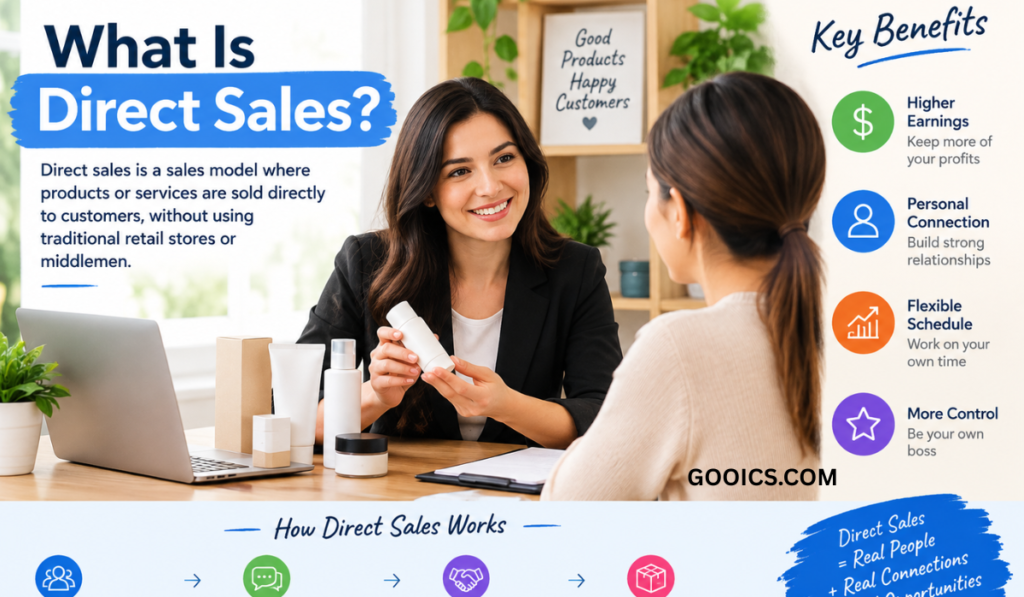
Direct sales is a business model in which products or services are sold straight to consumers, away from a traditional retail store. Instead of a shop shelf, the sale happens through a personal connection: in a home, at a workplace, online, over the phone, or through a video call.
The seller is usually an independent representative, often called a consultant, distributor, or ambassador. They represent a parent company, promote its products, take orders, and earn a commission or profit on each sale. The company handles manufacturing, shipping, and customer service, while the representative focuses on building relationships and selling.
In short, direct sales removes the middleman. The company sells to the customer through a person, not through a store.
How Does Direct Sales Work?
The process is simple, which is a big part of its appeal.
- Join a company. A person signs up as an independent representative, usually by purchasing a starter kit or paying a small registration fee.
- Learn the products. The company provides training, samples, catalogs, and marketing materials.
- Reach customers. Representatives sell through personal networks, social media, home parties, online events, or one-to-one conversations.
- Place orders. Orders are submitted to the company, which ships directly to the customer or to the representative.
- Earn income. The representative receives a commission, a retail markup, or both.
Because there is no store to rent and no stock to display, startup costs are typically much lower than opening a traditional business.
Types of Direct Sales
Direct sales is not a single method. It includes several approaches, and many sellers combine them.
One-to-One Selling
The representative sells personally to a single customer, such as a door-to-door visit, a product demonstration, or a private consultation. This approach works well for products that benefit from explanation, like insurance, cosmetics, or household appliances.
Party Plan Selling
A host invites friends and family to a gathering where the representative presents products. The host often receives a gift or discount based on the sales made. Home parties for cookware, jewelry, and candles are classic examples.
Online and Social Selling
Today, a large share of direct sales happens on Instagram, Facebook, WhatsApp, and live video. Representatives share product content, answer questions in messages, and send customers to a personal ordering link.
Network Marketing (Multi-Level Marketing)
In this model, representatives earn from their own sales and also from the sales of people they recruit. Some companies in this category are legitimate and transparent, while others are problematic, which is covered in the next section.
Direct Sales vs. MLM: What Is the Difference?
People often use the terms interchangeably, but they are not the same.
- Direct sales is the broad category of selling products personally to customers outside a retail setting.
- Multi-level marketing (MLM) is one compensation structure within direct sales, where earnings also come from a recruited team.
A company that pays only on personal product sales is a single-level direct sales company. A company that pays through multiple levels of recruitment is an MLM. Not every direct sales company is an MLM, and the distinction matters when you evaluate an opportunity.
Direct Sales vs. Retail
| Factor | Direct Sales | Traditional Retail |
|---|---|---|
| Where it happens | Home, online, in person, virtual | Physical or online store |
| Startup cost | Low | Often high |
| Customer relationship | Personal and ongoing | Often impersonal |
| Inventory risk | Usually minimal | Significant |
| Income control | Tied to your own effort | Salaried or business-dependent |
Advantages of Direct Sales
Low startup cost. You can begin with a small investment compared to opening a shop.
Flexible schedule. You choose when and how much you work, which suits students, parents, and anyone with a full-time job.
Company support. You receive product training, marketing tools, and often a ready-made brand, without building one yourself.
Personal connection. Face-to-face and conversational selling builds trust, which often leads to repeat customers and referrals.
Skill development. Communication, negotiation, customer service, and time management are skills you build along the way.
Income potential tied to effort. There is no salary ceiling, so more activity can mean more earnings.
Disadvantages and Risks
Direct sales is not a guaranteed route to income, and it is worth being realistic.
- Income is not guaranteed. Many representatives earn modest amounts, and some earn little or lose money after expenses.
- Hard work and rejection. Success depends on consistent outreach, and you will hear “no” often.
- Upfront purchases. Some companies pressure representatives to buy large amounts of stock or monthly minimums.
- Market saturation. In some companies, too many sellers compete for the same small circle of customers.
- Scams. Some operations disguise pyramid schemes as direct sales, where earnings depend mainly on recruitment rather than product sales.
Examples of Products Sold Through Direct Sales
Direct sales covers a wide range of categories, including:
- Beauty and skincare
- Health and wellness products
- Nutritional supplements
- Home and kitchen goods
- Cleaning products
- Jewelry and fashion accessories
- Books and educational materials
- Insurance and financial services
- Energy and utility plans
How to Spot a Legitimate Direct Sales Company
Before joining, check these points:
- Real products with real demand. Customers should want the product regardless of any business opportunity.
- Focus on sales, not recruiting. Income should come mainly from selling products to genuine customers.
- Reasonable startup costs. Be cautious if a company demands large payments or inventory purchases.
- A fair buy-back policy. Reputable companies will repurchase unsold stock if you leave.
- Transparent income disclosures. The company should publish what typical representatives actually earn.
- A track record. Research reviews, complaints, and regulatory actions, and ask current representatives honest questions.
If the pitch emphasizes fast riches, lavish lifestyles, or recruiting over products, treat it as a warning sign.
How to Succeed in Direct Sales
- Believe in what you sell. Genuine enthusiasm is more persuasive than any script.
- Start with your existing network, then expand. Warm contacts convert best, but do not stop there.
- Use social media consistently. Share helpful content, real results, and honest recommendations instead of constant hard selling.
- Prioritize customer service. Follow up, answer questions, and make reordering easy.
- Track your numbers. Know your sales, expenses, and profit so you can see whether the business is working.
- Keep learning. Use company training and learn from experienced sellers.
- Be honest. Making false income or health claims damages trust and can break the law.
Is Direct Sales Right for You?
Direct sales may suit you if you enjoy talking to people, can work independently, and want a flexible, low-cost way to start earning. It is less suitable if you need stable, predictable income right away or dislike selling.
Treat it like any business: research the company, understand the costs, set realistic expectations, and start small.
Frequently Asked Questions
Is direct sales legal? Yes. Direct sales is a legal and regulated business model in most countries. Pyramid schemes, which rely on recruitment instead of product sales, are illegal.
Is direct sales the same as MLM? No. MLM is one type of direct sales that includes earnings from a recruited team. Direct sales also includes single-level models.
How much money can you make in direct sales? It varies widely. Most part-time representatives earn modest income, while a smaller number build substantial businesses through consistent effort over time.
Do you need experience to start? No. Most companies provide training, so beginners can start without prior sales experience.
Can you do direct sales online? Yes. Many representatives sell entirely through social media, messaging apps, and virtual events.
Conclusion
Direct sales is a business model where independent representatives sell products straight to consumers through personal relationships, outside of traditional stores. It offers low startup costs, flexibility, and the chance to build valuable skills, but it also demands effort and carries real risks. By understanding how it works, how it differs from MLM, and how to evaluate a company, you can decide whether direct sales fits your goals and approach it with clear eyes.