
Introduction
In today’s competitive industrial environment, businesses are constantly looking for ways to improve productivity, reduce operational costs, and maintain high-quality standards. One of the most effective solutions for achieving these goals is manufacturing software. This technology has transformed traditional manufacturing processes by providing real-time data, automation, and better control over production activities.
Whether you operate a small factory or a large industrial enterprise, manufacturing software can help streamline operations, increase efficiency, and support smarter business decisions. As digital transformation continues to reshape industries worldwide, investing in advanced manufacturing software has become a necessity rather than a luxury.
What Is Manufacturing Software?
Manufacturing software is a digital solution designed to help manufacturers manage, monitor, and optimize their production processes. It integrates various aspects of manufacturing operations, including inventory management, production scheduling, quality control, supply chain management, and reporting.
By centralizing data and automating repetitive tasks, manufacturing software enables businesses to improve operational efficiency and reduce the risk of human error.
Why Manufacturing Software Is Important
Modern manufacturing involves complex processes that require precise coordination between different departments. Without the right tools, companies may struggle with production delays, inventory shortages, and quality issues.
Manufacturing software addresses these challenges by providing:
- Real-time production monitoring
- Improved inventory tracking
- Better resource allocation
- Enhanced quality control
- Accurate forecasting and planning
- Reduced operational costs
- Increased productivity
These benefits help manufacturers remain competitive in an increasingly demanding market.
Key Features of Manufacturing Software
Production Planning and Scheduling
Manufacturing software helps businesses create accurate production schedules based on demand forecasts, available resources, and workforce capacity. This ensures efficient use of equipment and minimizes downtime.
Inventory Management
Effective inventory management is crucial for manufacturing success. Manufacturing software tracks raw materials, work-in-progress items, and finished products in real time, helping businesses avoid stock shortages and overstocking.
Quality Control
Maintaining consistent product quality is essential for customer satisfaction. Manufacturing software allows companies to monitor quality standards throughout the production process and identify potential issues before they become major problems.
Supply Chain Management
The software helps manufacturers coordinate with suppliers, manage procurement activities, and track shipments. This improves supply chain visibility and reduces disruptions.
Reporting and Analytics
Advanced reporting tools provide valuable insights into production performance, operational efficiency, and financial metrics. These insights support data-driven decision-making.
Benefits of Using Manufacturing Software
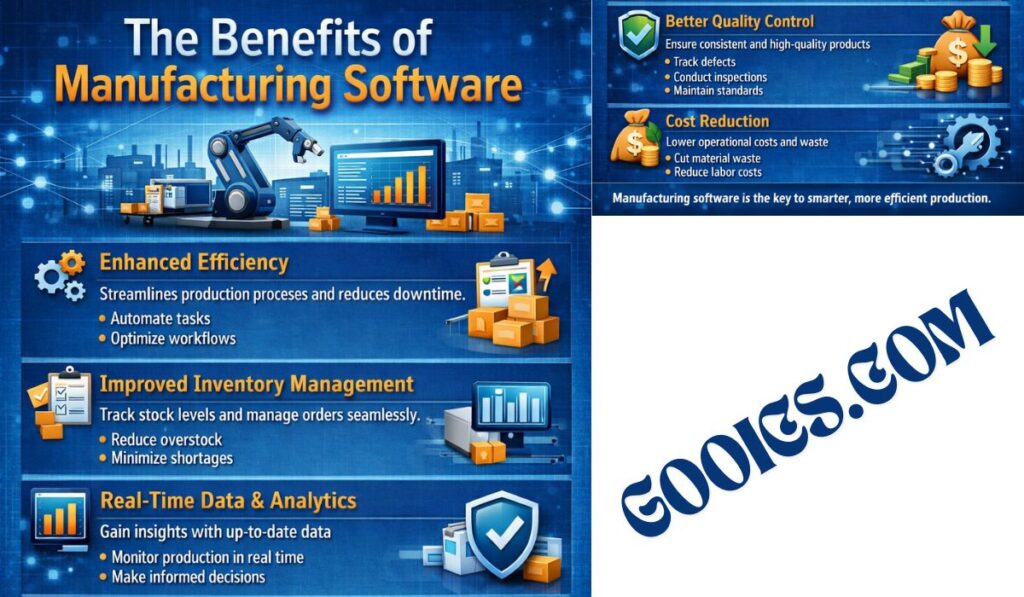
Increased Efficiency
Automation reduces manual tasks and streamlines workflows, allowing employees to focus on higher-value activities.
Cost Reduction
Manufacturing software helps identify inefficiencies, reduce waste, and optimize resource utilization, leading to significant cost savings.
Improved Accuracy
Automated data collection minimizes human errors and ensures accurate information across all departments.
Better Customer Satisfaction
Efficient production processes and improved quality control result in timely deliveries and higher-quality products, enhancing customer satisfaction.
Scalability
As businesses grow, manufacturing software can adapt to increased production demands and evolving operational requirements.
Types of Manufacturing Software
Enterprise Resource Planning (ERP)
ERP systems integrate manufacturing operations with finance, human resources, procurement, and customer management.
Manufacturing Execution Systems (MES)
MES software monitors and controls production activities on the factory floor, providing real-time visibility into manufacturing processes.
Product Lifecycle Management (PLM)
PLM software manages the entire lifecycle of a product, from design and development to production and maintenance.
Inventory Management Software
This type of software focuses on tracking inventory levels, managing stock movements, and improving warehouse operations.
How to Choose the Right Manufacturing Software
Selecting the best manufacturing software requires careful evaluation of your business needs. Consider the following factors:
- Company size and production volume
- Industry-specific requirements
- Scalability and flexibility
- Integration capabilities
- User-friendliness
- Customer support
- Security features
- Total cost of ownership
A thorough assessment will help ensure that the chosen solution aligns with your long-term business goals.
Future Trends in Manufacturing Software
The future of manufacturing software is being shaped by emerging technologies such as:
Artificial Intelligence (AI)
AI-powered systems can predict equipment failures, optimize production schedules, and improve quality management.
Internet of Things (IoT)
Connected devices provide real-time data from machinery and production lines, enabling smarter decision-making.
Cloud Computing
Cloud-based manufacturing software offers greater flexibility, remote access, and reduced infrastructure costs.
Data Analytics
Advanced analytics help manufacturers uncover patterns, identify opportunities, and make informed strategic decisions.
Conclusion
Manufacturing software has become an essential tool for businesses seeking to improve efficiency, reduce costs, and maintain a competitive edge. By automating processes, enhancing visibility, and providing valuable operational insights, manufacturing software empowers organizations to achieve higher levels of productivity and quality.
As technology continues to evolve, manufacturers that embrace digital solutions will be better positioned to adapt to changing market demands and drive sustainable growth. Investing in the right manufacturing software today can lay the foundation for long-term success in the modern manufacturing landscape.
FAQs
1. What is manufacturing software?
Manufacturing software is a digital solution that helps businesses manage production, inventory, quality control, scheduling, and operational processes.
2. Why is manufacturing software important?
It improves efficiency, reduces costs, minimizes errors, and provides real-time visibility into manufacturing operations.
3. What are the main types of manufacturing software?
The main types include ERP systems, MES software, PLM software, and inventory management software.
4. Can small businesses use manufacturing software?
Yes, many manufacturing software solutions are designed specifically for small and medium-sized businesses.
5. How does manufacturing software improve productivity?
By automating repetitive tasks, optimizing production schedules, and providing real-time operational data.
6. Is cloud-based manufacturing software better?
Cloud-based solutions offer flexibility, remote access, scalability, and lower infrastructure costs, making them a popular choice for modern manufacturers.